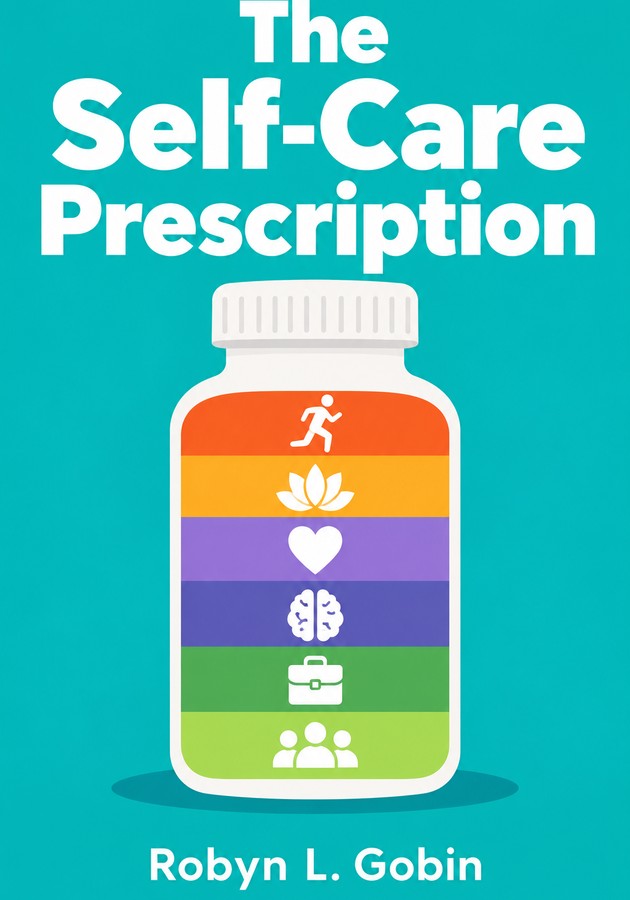
So, how can you ‘’do’’ self-care? As we have already mentioned, the popular idea of self-care revolves around ice cream, bubble baths, massages, or pedicures. While treating yourself to snacks or beauty treatments can be a self-care routine, it won’t make you feel empowered and energized in the long run. Gobin believes the self-care prescription should, therefore, include nurturing every aspect of ourselves—mind, body, and spirit. In ‘’Self-Care Prescription,’’ she focuses on strategies that will help you improve six essential dimensions of wellness: the physical, spiritual, emotional, intellectual, vocational, and social. Let’s review what each of them entails and what you need to do to keep them healthy and well-balanced.
Physical and intellectual self-care
‘’Physical self-care involves caring for your body in ways that sustain, revitalize, and strengthen it,’’ Gobin writes. It involves three components: physical movement, sleep and rest, and proper nutrition.
Although people know that activity, sleep, and healthy food benefit their body, they often do nothing to make exercising, preparing a nourishing meal, or sleeping for at least seven hours per night part of their daily routine. The truth is, with only little creativity, anyone can find time in their schedule for doing things that enhance their physical health. For instance, if you want to engage in physical exercise, create an opening in your weekly schedule and follow through on the planned activity. Keep in mind that doing physical activity doesn’t necessarily need to be about going to the gym. It can include doing stretches during commercials on TV, engaging in physical activity with your pet, spouse, kids, or taking the stairs instead of an elevator or escalator. Remember, even short periods of exercise produce health benefits.
Just as physical exercise is an inevitable part of physical self-care, so is brain exercise for the intellectual. It helps your brain realize its full potential and function well as long as possible. Learning new things is perhaps the best way to stimulate our brains, and, contrary to what many might think, it does not need to be boring or look anything like it did in school. You can gain new knowledge by reading a book, magazine, or blog for pleasure, listening to an informational podcast or an audiobook, solving crosswords, visiting a museum, or engaging in healthy debate on a topic you’re passionate about. Yes, all these fun activities exercise your mind—the point is, as with physical self-care, to carve out time in your schedule to do them. Perhaps you can do your weekly planning by writing down in your notebook one thing you will do in the following week to support your brain. To increase your chances of sticking to your intellectual self-care routine, think about the possible barriers you can face before taking an action. Perhaps you won’t be in a mood, or you’ll have a headache? Then, come up with ways to overcome them.
Be a good friend — to yourself and others
Humans are social beings—we communicate and form relationships with others from the moment we exit the womb. Social connections contribute to our mental health, and without them, we might feel stressed, depressed, lonely, or anxious. For this reason, social self-care is an unavoidable element in a self-care prescription, and Gobin defines it as ‘’nurturing your need for connection with other people.’’ In essence, it involves taking care of existing relationships and friendships, creating new connections, and establishing healthy boundaries in relationships with others.
So, how can you foster social connections? First of all, create your social-self care vision. Here is an example of one: “I am shaping relationships in which deep connection is plentiful, love and respect is mutual, and contact is pleasant and consistent.” Then, develop a social-self care plan to make your vision a reality. It can, for example, include doing your favorite activities, ranging from sports and vigorous exercise to dancing or playing a board game with people you care for. Perhaps you can even combine social self-care with caring for your physical and intellectual health. Why wouldn’t you and your friends meet to prepare a healthy meal together or learn a new language?
Although spending quality time with our close ones is important, sometimes we need to isolate ourselves from everyone and dedicate some time to our emotional needs. According to Gobin, emotional self-care involves ‘’acknowledging and embracing all of our emotions—both pleasant and unpleasant—and giving ourselves what we need when we are experiencing emotional pain.’’ The key to being emotionally healthy is developing an assertive relationship with our emotions. Once we do this, we will be able to embrace the pain when we are hurting because we know it won’t last forever. Assertive relationship with our emotions also allows us to savor the pleasant moments without holding on to them too tightly. Finally, emotional assertiveness enables us to control our emotional responses and cope with life’s challenges effectively.
Find more meaning in your career
Work is an area of life where lots of people feel dissatisfaction. The survey recently conducted by Gallup showed that 51% of full-time workers in the U.S. do not feel connected to their work, and 16% of employees strongly dislike their job. Unfortunately, people often hesitate to make any changes because they need paychecks to survive.
Although it is rare, there are individuals whose job gives them a sense of purpose and fulfillment, and that is because they have their vocational needs met. As Gobin writes, ‘’Your vocational needs are the types of work, training, and volunteering that you feel especially attracted to, because these activities connect you to a deeper sense of purpose.’’ Even if your job does not give you satisfaction, there are some things you can do—at work and outside of it—to help yourself feel as if your vocational self-care needs are met.
Volunteering and doing activities that benefit others make us feel happier and healthier. So, think about the ways you can contribute to your surroundings. It doesn’t have to be anything radical like eradicating poverty or decreasing human suffering—you can make an impact by helping your family member overcome some challenge or solving your own problems you otherwise have no time or resources to dedicate yourself to.
Even if it sometimes seems there is nothing good about your job, there probably are some aspects that you like or appreciate. After all, there is no entirely awful job, right? Start improving your life at work by finding its benefits—and try to be grateful for them. Rather than being miserable about the downsides, observe them as challenges for which you should find solutions.
Finally, you can contribute to your vocational self-care by growing, learning, and developing new skills. Perhaps you can even take up a hobby that exploits your talents and brings you joy. This might increase earning potential at your current job or help you find new employment that is closer to your vocation.
Satisfy your spiritual needs
Look at yourself in the mirror. Beneath everything you see—your hair, skin, clothes—there is something invisible that represents the essence of who you are. It has been there with you from the moment of your birth, existing regardless of your roles and possessions. The energy you bring into a room, your likes and dislikes, your passion, the various emotions you experience, your intellect, creativity—all represent your nonmaterial, fundamental self. Some people call it soul—others spirit.
Your spirit also needs care, which entails engaging in activities that turn your attention inward and connect you with yourself. Spiritual self-care helps us realize what matters to us and what we believe in. It is ‘’less about believing in a higher power, and more about recognizing that we exist and have needs beyond the physical and material realm,’’ Gobin writes. Some of the activities that contribute to our spiritual health include worshipping in a faith community, spending time in nature, seeking guidance through prayer or meditation, practicing yoga, journaling, or spending time in personal reflection.
You can start with spiritual self-care by devoting five minutes in a day to doing nothing but sitting in the quiet and listening to your inner voice. Turn off your cell phone during this period, and don’t let anything distract you. Just appreciate the silence and observe what comes to your mind. You can also use this time to say a prayer, read an uplifting blog, or spend time in nature.
After you spend some time isolated from the outer world, try to become more aware of your thoughts and emotions. Whatever they are, only notice them without taking any action—just let them come and go. Once you get accustomed to treating your thoughts and emotions as temporary sensations, you will be able to detach from them in stressful and painful moments and make your decisions without being influenced by them.
Lastly, after you establish the connection with yourself, find a place to practice spiritual self-care alongside other people who will support you as you continue to grow spiritually. It can be a church, spiritual community service, Bible study at church, or a meditation group.
Final Notes
No one will ever care for you better than you do. Therefore, never forget to regularly ask yourself how you are doing and what your body, spirit, and mind are asking for. Remember: self-care is not a selfish act but the act of responsibility toward yourself and others.
If you do not know how to begin your self-care journey, reading ‘’The Self-Care Prescription’’ is a perfect place to start. As a chartered psychologist, Aisling Leonard-Curtin writes in her appraisal of this book, ‘’With a kind, warm, and compassionate tone, Robyn takes care of you as you learn to take better care of yourself.’’
12min Tip
To revive your social life, think about the activities you enjoy doing the most. Then, select the date and time you would be willing to set aside for one of these activities and ask your friends to join you.