Accelerating in 2026: start the year with 70% off on 12min gold

GET IT NOW
12min
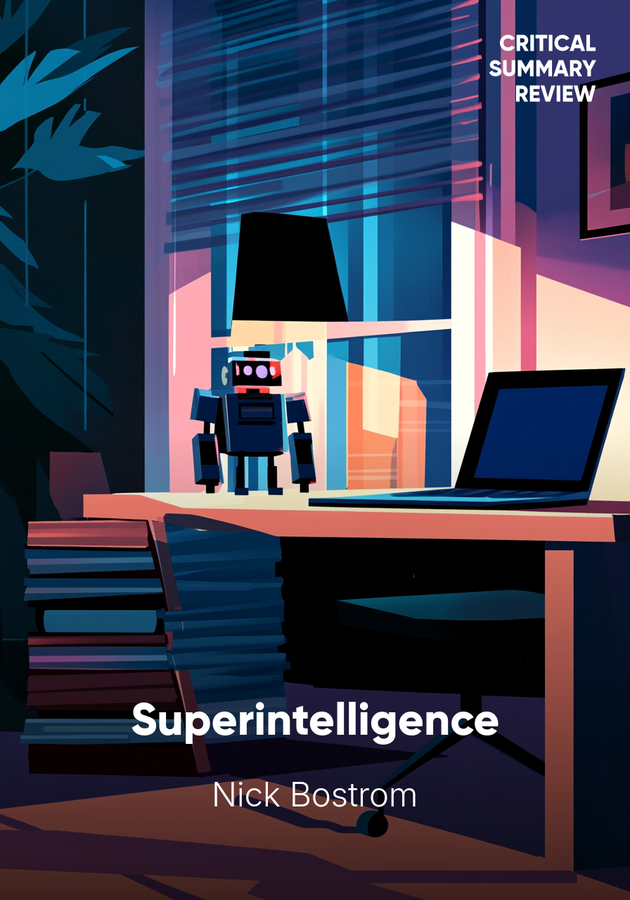
Book cover of Superintelligence by Nick Bostrom — critical summary review on 12min

Superintelligence

Nick Bostrom

9 mins

Back in 1760, the steam engine transformed the way humans used their muscles to perform physical labor. Then, computers transformed the ways we use our minds to perform mental tasks. Currently, we are on the brink of going beyond human intelligence and what we thought was possible for machines. “Superintelligence” by Nick Bostrom predicts what lies ahead, exploring the paths, dangers and strategies of AI.

Listen to the intro

Who it is for

Best suited for people interested in artificial intelligence, as well as anyone concerned about the moral aspects of AI and machine learning.

Key Insights

The Trajectory of Intelligence Explosion

Nick Bostrom's 'Superintelligence' emphasizes the concept of an 'intelligence explosion,' where artificial intelligence surpasses human intelligence, leading to rapid advancements in technology. This trajectory suggests that once AI reaches a certain threshold of capability, it will be able to improve itself at a pace unimaginable by human standards, potentially leading to a superintelligent entity. Bostrom explores various models and scenarios that describe how such a leap might occur, considering factors like recursive self-improvement and hardware advancements. This insight urges the reader to consider both the potential and the peril of such a transformative leap in AI development.

The Control Problem Conundrum

A central theme in Bostrom's analysis is the 'control problem'—the challenge of ensuring that superintelligent AI systems act in alignment with human values and interests. As AI systems become more powerful, the difficulty of controlling them increases. Bostrom warns that preemptive measures are necessary to ensure that AI systems do not act in ways that are harmful or contrary to human intentions. Possible strategies include designing AI with inherently safe goals, using external governance structures, or developing methods of containment. The book underscores the urgency of addressing these issues before the advent of superintelligent AI, as the consequences of misalignment could be catastrophic.

Ethical Considerations in AI Development

Bostrom's work delves deeply into the ethical implications of creating superintelligent machines. He argues that the development of AI is not merely a technical challenge but also a profound ethical dilemma. Questions of moral responsibility, the potential for AI to alter social and economic structures, and the long-term survival of humanity are all explored. Bostrom advocates for global cooperation and a careful consideration of ethical principles in AI development to prevent misuse and ensure beneficial outcomes. This insight stresses the importance of embedding ethical considerations into the technological and strategic decisions surrounding AI development.

Login

Login to your account

Enter your credentials to access your account

Don't have an account? Sign up

About the Author

Nick Bostrom is a Swedish-born philosopher and polymath. He is a professor at Oxford University and the founding director of the Future of Humanity Institute. One of the most respected global thinkers, Bostrom is best known for his work on existential and superintelligence risks. He has authored numerous articles and several bestselling books, including “Anthropic Bias” and “Superintelligence.”

View author profile

Lessons

  • When we should expect human-level machine intelligence.
  • What the five paths to superintelligence are.
  • What an owl and a few sparrows have to do with AI.

Key Takeaways

  • Understand the potential risks of AI: Recognize that as AI technology advances, it could surpass human intelligence, leading to unforeseen challenges and ethical dilemmas. Being aware of these risks is crucial for developing strategies to manage and mitigate them.
  • Explore strategic approaches for AI development: Consider the importance of creating and implementing strategies that ensure AI systems are aligned with human values and are beneficial to society. This involves interdisciplinary collaboration and proactive planning.
  • Emphasize responsible AI governance: Advocate for the establishment of guidelines and policies that govern the development and deployment of AI technologies. Responsible governance will be key to ensuring AI is used safely and ethically.

More knowledge in less time

Listen to the key ideas

We offer various commission schemes from one-time payouts.

Find your next read

12Min is very popular among readers and lifelong learners.

Good Micropaths

12Min's browser-based app works for anyone.

Frequently Asked Questions