And in most mammals, they pretty much are. Humans are the sole exception. Due to our highly developed and highly functional brains, we’ve learned to short-circuit the primaeval chemical and electrical connections in our bodies. Sometimes, that’s great, because we can make positive emotions such as happiness and love last longer. However, exposing your body to negative emotions such as stress, anger and irritation for longer periods of time will inevitably drain all of your energy. And that’s what emotional exhaustion essentially is – not being able to go all the way through an emotion. Or, better yet, getting stuck in one.
The nature of stress
All emotions – even the positive ones – cause some kind of stress. Case in point, back in 1992, renowned British clinical psychologist Richard Bentall proposed that happiness be reclassified in diagnostic manuals under a new name: “major affective disorder, pleasant type.” In many ways, he was right: happiness, too, causes a range of physiological changes in one’s body that essentially reflect an abnormal functioning of the central nervous system. The only difference is that these changes are not negatively valued. But that doesn’t change the fact that happiness is a state of imbalance.
Evolution, however, built your body to crave balance. Since the world was for far too long full of immediate threats for human beings, evolution also devised mechanisms to help your body achieve the craved-for balance without compromising its safety. That’s where the temporariness of stressful emotions comes from. For example, when your body notices a chance for procreation, it triggers a few physiological changes inside you that you recognize as arousal. However, when it notices a lion, it activates the “generic stress response” which sends all blood and oxygen from your reproductive and digestive system to your muscles. After all, in the presence of an immediate threat, escaping is far more important than sex.
Now, once a zebra has escaped a lion, its stress levels immediately go back to normal. The blood is pumped back from the extremities to the other systems and the body regains balance. The same probably held true for our ancestors. However, it doesn’t for us, modern humans. The reason is because this system evolved in an environment of immediate, visible threats, while ours is one of constant, invisible risks and pressures. Rather than lions, we face alarms, notifications, exams, deadlines, office politics and more. And unlike lions, these are always there. Hence, our bodies remain regularly stressed, persistently stuck in some emotion and almost never out of all of them.
This is where many of our health issues stem from. As we said above, in the presence of a threat, your digestive and reproductive systems stop working properly because they are deprioritized by your innate fight-or-flight reflex, which, in turn, is programmed to give precedence to the muscles of your extremities. Put otherwise, when stressed, you can run like a leopard and fight like a polar bear, but you can never get aroused or take delight in your lunch. Put otherwise, too much stress equals ulcers and impotence. There’s a reason why zebras don’t get either, and humans do.
How do you solve a problem like stress?
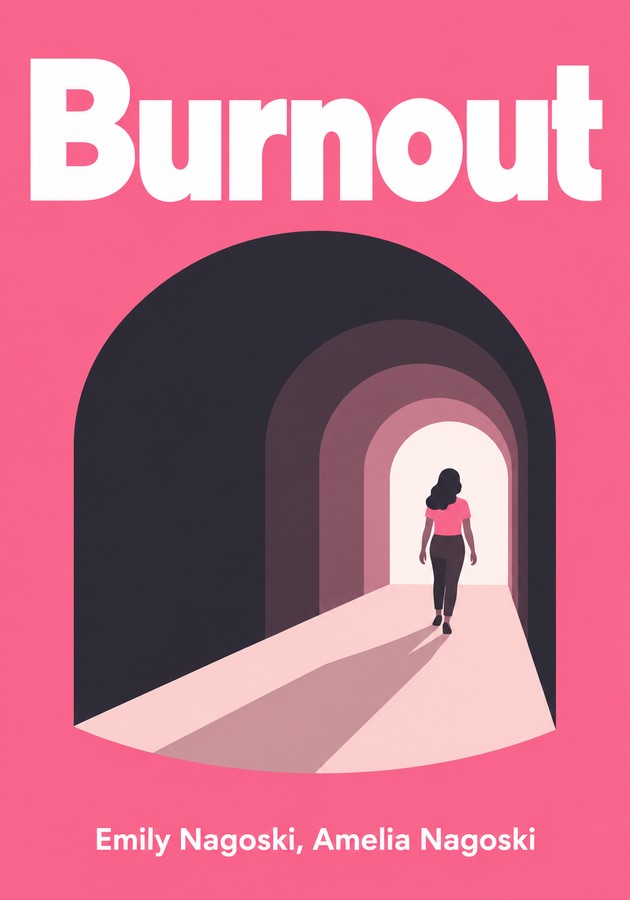
Before we go on, let’s see where we are at the moment. We learned that emotions are temporary physiological turbulences inside your body. We also learned – to use a great analogy by the Nagoski sisters – that you can picture them as tunnels wherein sometimes you might get stuck as a result of not being able to find your way through. Converting the temporary cascade of neurological activity related to your emotions into something more enduring is pretty much what stress is. The longer it lasts, the more likely it is that you’ll end up emotionally exhausted in the end. Unfortunately, nowadays stress has become a permanent fixture of our lives. The reason is simple: there are just too many stressors around.
Stressors are the things that activate the stress response in your body. Formerly, stressors were visible, immediate threats such as lions and hippos. Nowadays, however, they are less tangible and more abstract and can include everything from work and money to family and cultural expectations to body image and self-criticism. Unfortunately, we react to modern stressors the same way our ancestors reacted to lions: we use the same systems. However, as the Nagoski sisters point out, “Dealing with your stress is a separate process from dealing with the things that cause your stress. To deal with your stress, you have to complete the cycle.” But what does that mean?
For animals with less developed brains, the stress response cycle is activated and exists only in the presence of a stressor. In other words, a zebra cannot be stressed when there are no lions around. It’s impossible. However, humans can – because their highly active brains can always imagine a lion. Paradoxically, that means that humans can be stressed even in the absence of any real stressors. “This is the upside-down world we live in,” write the Nagoski sisters. “In most situations in the modern, post-industrial West, the stress itself will kill you faster than the stressor will – unless you do something to complete the stress response cycle.”
Incomplete cycles
There are a lot of reasons why the stress response cycle might not complete. The three most common ones are the following:
- Chronic stressor leads to chronic stress. Sometimes the constant presence of a tangible stressor causes chronic stress. For example, if you don’t like your boss or the company you work for, there’s no way you won’t feel stressed out every single day. The situation is pretty much the human-world version of a zebra repeatedly visiting the natural habitat of lions.
- Social appropriateness. People often get stuck in emotions because of politeness or conventions. For example, no matter how much your body might want you to punch your inconsiderate and rude client in the face, your mind will do its best to force your body to sit politely and smile.
- It’s safer. In many cases, not completing the stress cycle is your best survival strategy. For example, if a girl is harassed on the street, theoretically, the optimal way for her to complete the stress response cycle caused by the situation is to turn around and slap the guy in the face. However, if she does that, she might make the situation far more dangerous. So, she does nothing.
Even though being polite or doing nothing can sometimes be a better survival strategy than completion, neither of the two gets you out of the stress response cycle; they just postpone your body’s immediate needs. There is a reason why the stress cycle is colloquially known as “the fight or flight reflex.” These are essentially the main two ways to complete it – you either run away from the threat or face it head-on. Instead, most of us usually choose the third strategy, somewhat rare in the animal kingdom: we freeze, or “play dead,” until the threat goes away on its own. Guess what? It probably won’t. Because nine times out of 10, it’s not a real lion, but an imagined one. That is to say, it’s not something out there, but something inside your mind.
Completing the cycle: tools and practices
There are many ways to complete the stress response cycle, and all of them encompass doing something; freezing can only get you stuck. As a rule of thumb, nothing leads to completion more immediately than pure physical activity, like running, swimming or even jumping up and down. Even though our minds have evolved, our bodies still speak the language of our distant ancestors and are unable to distinguish between a lion and a deadline. They react to both threats identically; consequently, they expect you to react identically as well. If you get attacked by a lion, you’d run; well, do the same in the case of a deadline too!
Physical activity, write the Nagoski sisters, is “the single most efficient strategy for completing the stress response cycle.” It is “what tells your brain you have successfully survived the threat and now your body is a safe place to live.” Consequently, you should make exercise the first line of attack in your battle against burnout. There are a few other evidence-based methods that should work as well. For example, for lower levels of stress, you can try deep, slow breathing and even deeper, helpless laughter. Watching your favorite tearjerker movie is another option, because whatever makes you cry at the end has in fact allowed your body to go through an emotion and complete the stress cycle. Creative self-expression – whether writing, drawing or singing – has been shown to have a similar effect.
Positive social interaction is another strategy that works. After all, it is, by definition, an external cue for safety, an indication that the danger has passed. When it comes in the form of affection – a 6-second kiss or a 20-second hug – it completes the cycle even better than when it comes in the form of a casual conversation. Affection is an antidote to loneliness and, in a way, almost all of the most difficult feelings – rage, grief, despair, helplessness – are forms of solitude. That’s why, whenever you experience one of these emotions, you should not hesitate to combine some physical activity with interpersonal connection.
“Connection – with friends, family, pets, the divine, etc. – is as necessary as food and water. Humans are not built to function autonomously; we are built to oscillate between connection and autonomy and back again,” write the Nagoski sisters. We are also built to “oscillate from effort to rest and back again,” so if you don’t want to have problems with your stress response cycle, you should spend about 10 hours a day resting. Finally, you should grant yourself the freedom to feel and experience things. Be compassionate toward yourself and grateful for what you already have. Nothing beats stress as well as self-acceptance and nicely aligned expectations.
The real enemy
A few minutes ago, we told you that women are far likelier to suffer from emotional exhaustion than men. Now, we’ve come to that part where we explain why. If you thought that the gender discrepancy in burnout has something to do with hormones, then congratulations – you are probably a part of the problem. Because the real problem is precisely that: the way women are seen and treated by society. Nothing new there, of course, but here’s a new lens to look at patriarchy and prejudice. It’s called the Human Giver Syndrome.
Introduced by philosopher Kate Manne in her 2017 book “Down Girl: The Logic of Misogyny,” the Human Giver Syndrome is “the contagious belief that you have a moral obligation to give every drop of your humanity in support of others, no matter the cost to you.” In patriarchy, the Syndrome hits women especially hard, because they are – to quote Simone de Beauvoir – the second sex, that is, defined mainly with reference to men. It is women who are mostly expected “to offer their time, attention, affection, and bodies willingly, placidly, to the other class of people, ‘the human beings’,” aka: the men. Don’t believe us? The latest stats say that, globally, women spend 40 hours per week doing unpaid work, compared to men who spend just an hour and a half!
Add to that the fact that many women are pretty much raised to be “human givers” – to be “good girls,” to be “nice,” to be pretty and happy and calm and generous. Because fear and anger can cause distress in the “human beings” around them, they are taught that it’s not nice (not “ladylike”) to express those emotions in front of other people. So, most women suppress their feelings. They suppress their needs as well. Human givers aren’t supposed to need anything but other human beings to care for. Whether children, parents, siblings or husbands – all of them exist solely to be tended and watched over by the female human givers of the world. “If we had set out to design a system to induce burnout in half the population,” write the Nagoski sisters, “we could not have constructed anything more efficient.”
By now, you should be able to deduce why. As we said, emotional exhaustion happens when we get stuck in the tunnel of an emotion. Well, in the Human Giver Syndrome, the giver “isn’t allowed to inconvenience anyone with anything so messy as emotions, so givers are trapped in a situation where they are not free to move through the tunnel.” Their feelings, simply put, matter less than the feelings of other people. The worst part? Patriarchal societies gaslight women into believing that their supposedly innate giving nature isn’t a symptom of a societal disease or a role invented by men, but a normal and true idea engraved deep in the female DNA. Well, news flash: most certainly it is not! Women lose the game of burnout more than men do because the game is rigged. That’s why individual wins aren’t enough. Women of the world, unite!
Final notes
Lauding the ability of Emily and Amelia Nagoski to deliver cutting-edge science with “energy, empathy, and wit,” bestselling author Sarah Knight described “Burnout” as “truly life-changing” and pronounced it “the gold standard of self-help books.”
Indeed, if you are an adult woman, there aren’t many books that treat emotional exhaustion the way the Nagoski sisters’ book does – not only as an immensely prevalent real-world issue that must be individually tackled today, but also as a gender-related and systemic problem that has to be corrected tomorrow on a societal level. Practical, timely and useful.
12min tip
Fight emotional exhaustion through physical activity, meaningful connection with other people, rest, and self-compassion. Also, fight the system. Especially if you are a woman, it wasn’t built for your convenience.