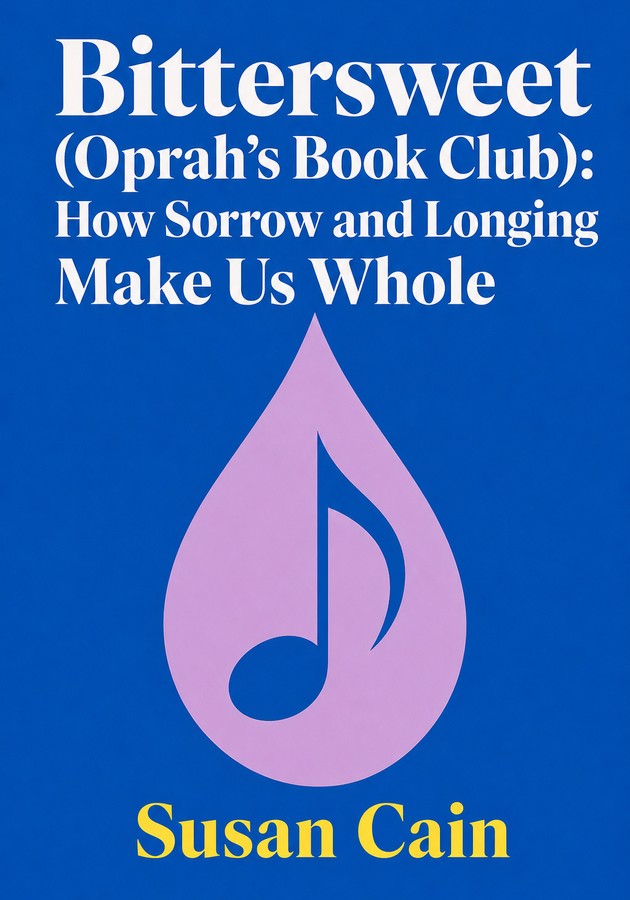
Psychologist Dacher Keltner spent his career on this. His research on what he calls the compassionate instinct shows our nervous systems are wired to respond to another person's pain. When we witness suffering, ancient structures light up — the periaqueductal gray, the vagus nerve, the same machinery that runs breathing and digestion. Caring, in other words, is not a moral add-on. It sits next to the functions that keep you alive.
Keltner traces the root to the mother-child bond. Human infants are helpless for years, so evolution built adults who melt at the sound of crying. That instinct then radiates outward, to strangers, to animals, to people we'll never meet. Darwin himself, who lost his daughter Annie at ten, argued that sympathy was humanity's strongest instinct — something closer to survival of the kindest than survival of the fittest.
Watch the viral video of a toddler weeping at Beethoven's "Moonlight Sonata." She has no vocabulary for grief. Her body already knows.
The ache for a world that doesn't exist
Alain de Botton wrote an essay titled "Why You Will Marry the Wrong Person," and he meant it kindly. His point is practical: no human being can deliver the total, unconditional understanding we secretly expect. Expect it, and you'll be disappointed forever. He's right about marriage. But Cain asks a different question — where does that impossible expectation come from in the first place?
Nearly every culture has named it. The Greeks called it pothos. The Portuguese say saudade. In Hindu poetry it's viraha, the pain of separation from the beloved. C.S. Lewis built much of his thinking around the German word Sehnsucht — an inconsolable longing for something you can't quite identify and have never actually had. It arrives without warning: at a certain slant of light, a rainy afternoon, the last minute of a sad song.
Cain's encounter with Sufism, the mystical branch of Islam, reframed the whole thing for her. Teachers like Llewellyn Vaughan-Lee describe longing for the Divine as the central practice, not a problem to be solved. And in Rumi's poem "Love Dogs," a man is mocked for crying out to God with no answer coming back. The reply, finally, is that his crying was the answer. The longing is the return message.
That reframe changes what you do with the ache. You stop treating it as evidence that something's wrong with your life, and start reading it as a direction.
Pain that got turned into something
Leonard Cohen was nine when his father died. He cut open one of his father's bowties, wrote a few lines inside it, and buried it in the garden. He spent the next six decades doing a more elaborate version of the same act. The microbook treats that moment as the model: creativity is not pain itself, it's the move out of pain — taking what hurts and making it into an offering someone else can hold.
The pattern shows up in the data. Studies of eminent creative figures find a striking share lost a parent in childhood, and artists show higher rates of mood disorders than the general population. But Cain is careful here. Suffering doesn't produce art. Transformation does. Beethoven wrote the "Ode to Joy" while going deaf and miserable — the triumph wasn't a report on his life, it was his answer to it.
Min Kym's story makes it concrete. The violinist's priceless Stradivarius was stolen from a café in 2010, and she collapsed — she had played that instrument as an extension of her own body. Years passed in depression. Then she wrote Gone, a memoir about the loss, and found a second way to be an artist.
Psychologist David Yaden studies self-transcendent experiences, those moments when the boundary around the self thins and you feel joined to something larger. They're triggered most often by awareness of impermanence — near death, at a funeral, in a room of strangers singing a dead man's songs. That's the bittersweet door, and it only opens from the sad side.
What to do with love you lost
Cain writes openly about her mother. Theirs was a deeply loving bond that ruptured in adolescence and led to years of estrangement — and behind her mother's behavior sat her own parents' unspoken trauma. Cain's conclusion isn't that she healed it. It's that she learned to recognize the love in its new form, rather than mourn the form it used to take.
She offers three honest truths. Loss shapes your patterns, and you have to see those patterns clearly or you'll repeat them. You will probably always have certain emotional soft spots — they don't fully close. And the love you lost doesn't disappear; it keeps existing, just not where you keep looking.
For the practical side, she turns to Acceptance and Commitment Therapy, developed by Steven Hayes. Instead of fighting painful feelings, you let them sit there and ask what they're telling you about what you value. Grief points at love. Resentment points at a standard you care about. Then you act on the value, not on the feeling. Hayes built it partly out of his own panic attacks.
There's also the wounded healer. Maya Angelou stopped speaking for years after a childhood assault, and later wrote I Know Why the Caged Bird Sings — turning silence into a voice that gave other people theirs. And Sharon Salzberg's loving-kindness meditation, metta, trains you to wish well even to the person who hurt you. Not for them. For what it does to you.
Why America stopped allowing sadness
In much of the world, a stranger smiling at you is suspect — a sign of foolishness or dishonesty. In the United States, the smile is the baseline. Cain traces how that happened, and the history is less cheerful than the result.
It begins with Calvinist predestination. If God has already chosen who's saved, you can't earn it — but worldly success might reveal it. So relentless labor became proof of grace, and failure became evidence of something rotten inside you. Historian Scott Sandage documented the linguistic shift in Born Losers: A History of Failure in America. "Loser" once meant simply a person who had suffered a loss. By the nineteenth century it meant a defective character.
Then came the New Thought movement and, in 1952, Norman Vincent Peale's The Power of Positive Thinking, which sold millions on the premise that negative thoughts should be banished and optimism manufactures success. The message survived the Great Depression, which should have killed it, and lives on in the prosperity gospel.
Look at Stanford today, where students describe Duck Syndrome: serene on the surface, legs thrashing underwater. Everyone is drowning and everyone is smiling. The demand isn't excellence. It's effortless excellence — the appearance of succeeding without visible struggle. That's a tax on being human, and nearly all of us pay it.
The office is full of unspoken grief
Psychologist Susan David named the alternative: emotional agility. It means meeting your hard feelings with curiosity rather than suppression, then using the information inside them to make a change. Her core finding is uncomfortable and easy to test — emotions you push down don't shrink. They amplify.
Workplaces run on suppression. Someone's marriage is ending, someone's parent has dementia, someone just got passed over, and everyone performs fine in the meeting. Research from the CompassionLab tells a different story. Studying a hospital billing unit in the Midwest, researchers found a team that openly handled each other's crises — covering shifts, sending flowers, acknowledging grief out loud. It wasn't soft. It was the highest-performing unit of its kind.
James Pennebaker tested the private version. He asked engineers laid off from a Dallas company to write for twenty minutes a day about their deepest feelings about the job loss. Those who wrote were significantly more likely to be reemployed months later than those who didn't. Nothing changed in the market. Something changed in them.
Venture capitalist Tim Chang went further, learning to name what he calls his core wounds — the old insecurities driving his decisions — and found he led better once he stopped pretending they weren't steering. Try Pennebaker's version this week. Twenty minutes, nobody reads it.
The gift inside the fact that it ends
At the RAADfest conference, thousands of immortalists gather to argue that death is an engineering problem. Aubrey de Grey, the movement's most famous voice, speaks of longevity escape velocity — the point where medicine extends your life faster than you age. Cain went, and listened, and came away moved rather than dismissive. Beneath the technology she heard grief, and the same yearning she'd found in Rumi: for a world without loss.
But her argument runs the other way. Strip out mortality and you strip out urgency. The Japanese poet Issa, who buried his small daughter, wrote a haiku about this world being a world of dew, dew that vanishes — and then refused the lesson with a final line, "but even so." He knew everything passes. He wasn't going to be fine about it. Cain reads that refusal as the most honest spiritual position available.
Laura Carstensen's research at Stanford gives it a scientific edge. She found a positivity effect in aging: older people are often happier, because knowing time is short makes them drop the trivial and pour attention into what matters. You don't have to wait sixty years for it. Priming yourself with fragility works at any age.
And Nora McInerny, widowed young, told a TED audience that she hadn't moved on from her husband — she moved forward with him. Grief and happiness are not rivals. They share a room.
The pain you didn't start, and can finish
Cain was at a workshop when she found herself crying without knowing why, and began to suspect the tears weren't entirely hers. Her grandfather survived the Holocaust. Nothing about it was discussed. The silence, she realized, had been handed down anyway.
The science is startling. Dr. Rachel Yehuda's epigenetic research on children of Holocaust survivors found measurable cortisol abnormalities and a heightened vulnerability to PTSD in people who never lived through the event. Trauma can leave chemical marks on how genes are expressed, and those marks can travel a generation. But here's the turn that gives the chapter its force: if pain transmits, so does healing.
Jeri Bingham, a friend of Cain's, traveled to Gorée Island in Senegal and stood at the Door of No Return, the threshold through which enslaved Africans were loaded onto ships. Facing the place changed her relationship to a grief she'd carried without a source. Dr. William Breitbart does similar work from the other side — the son of Holocaust survivors, he built meaning-centered psychotherapy to help terminal cancer patients find purpose in their final months. Inherited pain became a vocation.
The final task, Cain argues, is separating your story from your ancestors'. Keep the connection. Put down the suffering. That's what gives them, and you, something fresh.
The longing is the instruction
Cain was a Wall Street lawyer who got told she wouldn't make partner. It felt like collapse. She later described it as a get-out-of-jail-free card. Afterward came a brief, consuming infatuation with a musician — and the slow realization that she didn't want the man. She wanted what he stood for: the creative life she'd quietly wanted since she was a kid. Her fantasy of a Greenwich Village townhouse was the same signpost in different clothing.
So the question the microbook finally puts to you is simple and hard. What are you longing for? Not what you should want. What aches. A gap between who you are and what you do all day. A sorrow for your children that seems outsized. A grief you can't trace. These are messages, and they are addressed to you.
The Kabbalah tells of a vessel of divine light that shattered at the beginning of the world, scattering shards everywhere. The job was never to rebuild the vessel. It's to bend down and gather the pieces near you — in your family, your work, your corner of the street. Vedran Smailović did it with a cello, in a crater in Sarajevo, for twenty-two days. Asked whether he was Muslim or Croat, a man fleeing that same war answered only: I am a musician.
Final notes
Denying sorrow was never strength — it was a costume, and an expensive one. The ache you've been apologizing for is the same instrument that lets you make something, love someone, and recognize a stranger's pain as familiar. You don't have to repair the whole broken world. Bend down, gather the shards nearest you, and notice what the light reveals. Your longing is the map that leads you home.