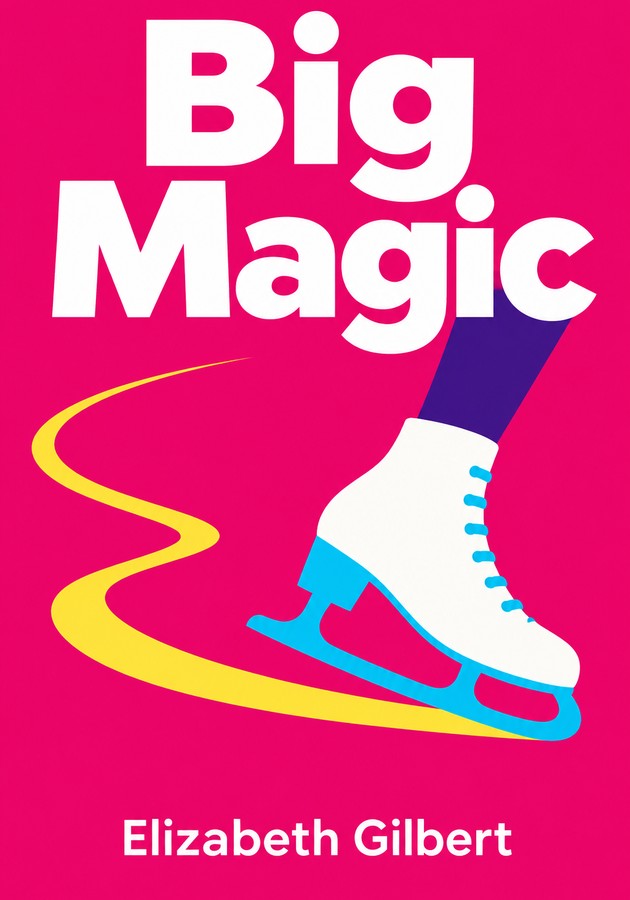
So, if you want to embark on a creative journey, the first thing you need to do is let go of your fear. That does not mean you should become fearless, however. Fear is useful sometimes as it protects you from actual dangers. Nevertheless, when it comes to creativity, fear prevents you from entering the realms of the unknown. Keep this in mind when doing something stimulating and inspiring.
Where do ideas come from?
Those who have ever created art are probably familiar with the ‘’intense emotional and psychological reaction’’ that follows the moment when an idea comes to mind. These moments are the starting point of creation, and Gilbert identifies them as inspiration. She says creativity and inspiration correlate - in fact, she defines creativity as the ‘’relationship between a human being and the mysteries of inspiration.’’ When she claims inspiration is mysterious, Gilbert says that is because she believes ideas are magical. They are disembodied and live separately from us - wandering in the universe, waiting to find a person who will give them a form. As they choose who to interact with, ideas have will and consciousness. Once they find somebody, they try to get their attention. However, if that person is oblivious to the idea's existence, it will move on to someone else.
If you say “yes” to an idea ‘’the two of you are working together toward something intriguing and worthwhile.’’ Those are the moments when big magic happens. However, it might happen that your idea stays without a form for a long time. In that case, it gets tired of waiting and moves on to someone else. Gilbert says that happened to her once. She had an idea for a novel that she planned to call ''Evelyn of the Amazon.’’ She came up with the plot and the publishing company accepted her proposal for it. In the meantime, she had to move from the United States to be with her fiance Felipe who was, at the time, an immigrant forbidden to enter the U.S. She used the time away from home to write another piece - a memoir called ‘’Committed.’’ When she returned home, she realized that two years was too long for an idea to stay fresh. In fact, she found out that her friend, Ann Patchett, was writing an Amazon jungle novel similar to the one she wanted to write. ‘’I could have wept over the loss,’’ she recalls. ‘’But I didn’t, because I understood the terms of the deal, and I accepted those terms. I understood that the best you can hope for in such a situation is to let your old idea go and catch the next idea that comes around.’’
Magic happens when you are persistent
Since creation depends on inspiration, there will be times on your creative journey when you will not produce any art. Do not fall into despair in moments like this, but keep on trying to create because magic will happen eventually. It takes courage to live creatively. Nevertheless, it takes persistence, too.
Gilbert says she has always wanted to be a writer. When she was 16 years old, she vowed to the universe she would write forever, regardless of the result. ‘’I did not ask for any external rewards for my devotion,’’ she writes. ‘’I just wanted to spend my life as near to writing as possible - forever close to that source of all my curiosity and contentment - and so I was willing to make whatever arrangements needed to be made in order to get by.’’ She has never broken that promise. She used to write every day when she was in her 20s. Even when she lacked inspiration, she would make herself sit and write anything she could think of for at least 30 minutes. She was persistent and managed to keep the vow because she was not focused only on the potential results of her writing. The process itself was important to her because it made her happy and fulfilled. Eventually, she managed to improve as well - practice and persistence made her writing better.
You can start living a creative and passionate life whenever you want - it is never too late. Remember Gilbert's friend who decided to skate in her 40s? Do not think you wasted your chance just because you did not begin your creative endeavors earlier in your life. Gilbert says she once met a woman who started studying the ancient history of Mesopotamia when she was 80 years old. As long as you are curious about the world around you, nothing can stop you from living creatively.
Creativity does not pay your bills
Creativity gives your life happiness, excitement, fulfillment, and passion. But the one thing it can take away from you is financial stability. In other words, do not expect creativity to pay your bills. Many people make mistakes when they decide to rely solely on creativity as their source of income. Gilbert uses the word ‘’childish’’ to describe them. According to her, it is irresponsible to expect that you can exploit your creativity in this way, as it always depends on external factors that are out of your control. In fact, doing this can cause you problems - you might fall into resentment, feel anxious and depressed if your creative endeavours fail to support you financially. Worst of all, you might give up on it forever.
‘’You must be smart about providing for yourself,’’ advises Gilbert. Find a job that will keep you safe financially and nurture your creativity at the same time. She says writing was not her primary source of income, even after she had published several books that had become bestsellers. She had other jobs and did not want to burden her creativity by expecting that it would pay for her life. By doing so, she became her own patron.
Other famous writers also did not want to pressure themselves by living off their writing. For example, until her books had become bestsellers, J. K. Rowling was writing ‘’Harry Potter’’ after finishing her regular job. Tony Morrison used to get up at 5 a.m. to work on her novels before work. Both of them did this because they wanted to live creatively and were willing to make an extra sacrifice for it.
Some people are aware that creativity is something they cannot always rely on. However, instead of getting a job, they decide to marry a rich person. Some even dream of inheriting money or winning a lottery. Gilbert calls this type of person childish, too. Everyone can look after themselves and their creativity at the same time. She says, ‘’There is a profound sense of honor to be found in looking after yourself, and that honor will resonate powerfully in your work; it will make your work stronger.’’
Choose what you trust
Robin Wall Kimmerer teaches environmental biology at the SUNY College of Environmental Science and Forestry in New York. When she encounters her students for the first time, she always asks them two simple questions. The first one is, ‘’Do you love nature?’’ Naturally, all students respond affirmatively. However, when she asks them whether they think nature loves them in return, their response is the opposite. What Kimmerer wants to show to her students by asking these questions is that their perception of nature is wrong. They believe humans are nothing more but passive consumers who harm nature without giving it anything in return. She thinks our relationship with nature is reciprocal - we give to it as much as it does to us.
Gilbert applies the same logic to creation. She thinks writing loves her as much as she loves it. However, many artists do not feel the same way. When she asks young writers whether they believe writing loves them, their answer is similar to that of the biology students. Numerous writers, both experienced and aspiring, often tend to perceive writing negatively. Take Oscar Wilde as an example. He used to identify writing as a long, lovely suicide. Norman Mailer claimed that each book he wrote brought him closer to death.
Artists often fetishize suffering, believing that genuine pieces of art can only arise from pain. Those who do not suffer, however, cause suffering themselves. For example, they drink a lot, sabotage their relationships, or envy the success of others. Gilbert says this is the stereotype of the Tormented Artist. People often choose to live in this role just to legitimize their own cruelty. Because, ‘’As the Tormented Artist, you get a pass, because you’re special,’’ Gilbert says.
As a person who wants to engage with their creativity, you can choose what you trust. You can believe there is no creation without pain. But, there is a better alternative - to derive energy from fighting against the pain. Think about it: Is it possible to create when you are unhappy? Big magic happens when you choose love over suffering. It is up to you to decide what to trust.
Final Notes
‘’Big Magic’’ can serve as a manual that any artist can use to learn to overcome obstacles that arise on their creative journey. Yet, it would have been better if Gilbert made her book only about artistic creation. Her attempt to extend the meaning of creativity might leave readers confused about what creativity actually is. Is anything we do creative as long as we are joyful while doing it? Imprecise interpretation of the meaning of creative living is the weakest point of this book.
12min Tip
It is never too late to start living creatively. Find your passion in pursuing an activity you enjoy.